
History of the Lango people
From the oral traditions of migration to the districts and cities of today.
The Lango are a Nilotic people of north-central Uganda. Oral tradition remembers a long migration from the north, a society built on clans rather than kings, a colonial era that created chiefs where there had been none, and a post-independence history in which Lango sons and daughters stood at the centre of the nation.
This history is compiled from the published sources listed at the end of the page. It will be reviewed and extended by historians and elders — and you can help. Share what you know.
- 2,546,118
- people in the sub-region (2024 census)
- 149
- registered clans
- 9 + 1
- districts, and Lira City
- Leb Lango
- a Western Nilotic language
Read the story
·01 OverviewWho are the Lango?A people of north-central Uganda, united by language, clan and a shared history.

The Lango (also written Langi) live in north-central Uganda, in the plains, wetlands and low hills around the northern shores of Lake Kyoga and the Nile. Their homeland, the Lango sub-region, covers roughly 15,500 square kilometres and today includes nine districts — Lira, Alebtong, Amolatar, Apac, Dokolo, Kole, Kwania, Oyam and Otuke — together with Lira City. At the 2024 census about 2.5 million people lived there.
Their language is Leb Lango, a Western Nilotic language related to the Luo languages spoken by their Acholi and Alur neighbours, although scholars continue to debate how closely the Lango should be linked with the Luo or with the Ateker peoples of Teso and Karamoja. What is certain is that Lango identity is old, distinctive and deeply rooted in the clan.
Why history matters
- It tells young people where their clans come from and why the Lango live as they do.
- It explains the names of places, ceremonies and customs still used today.
- It preserves the voices of elders, whose memories are the main archive of Lango history.
02 Before 1800Origins and migrationOral tradition, language and clan names point to a people of many origins.
There is no single, agreed account of where the Lango came from. Historians rely on oral tradition, language and the names of clans, and they have reached different conclusions.
The account preserved in oral tradition
Lango oral traditions trace the migration of the ancestors of the Lango from the Bahr el Ghazal region of present-day South Sudan between the 15th and 17th centuries, southwards into northern Uganda, where they settled as a decentralised society of clans.
What scholars add
- A mixed origin. Research on Lango identity stresses that the Lango came from diverse backgrounds and cannot trace themselves to a single grandfather or group.
- Links to Ateker peoples. Several Lango clan names — for example Atek, Okarowok, Arak and Otengor — also occur among the Karamojong, Jie, Teso and Kumam. Some researchers read this as evidence of shared origins; others describe it as the result of long contact and intermarriage.
- A Luo-related language. Leb Lango is closely related to the Luo languages, even though the Lango have historically distinguished themselves from the Luo.
- The name itself. The word “Lango” appears in the vocabularies of the Teso, Kumam, Karamojong, Jie and Labwor, and older records use “Lango” where the later form “Langi” is common today.
Taken together, the evidence suggests that the Lango formed over several centuries as groups of different origins settled together, shared a language and built a common way of life.
03 Before 1900Clans and society before colonial ruleSmall, localised clans, elders and war leaders chosen only for as long as a war lasted.
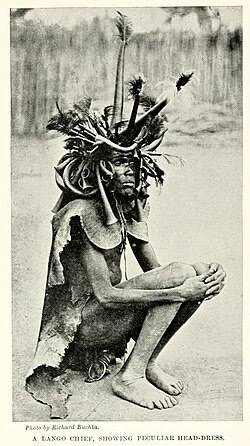
In the nineteenth century the most important social unit among the Lango was the clan. Clans were small and highly localised: a clan lived around its own villages and gardens and recognised its own head and elders. The clan leader is the Awitong, who guided decisions, resolved disputes and led clan rituals with the elders and spiritual leaders.
Leadership without kings
Unlike the kingdoms to the south, Lango society had no permanent chief. Power was shared among clans and elders. In times of war the clans united under one military leader chosen by consensus, and his authority ended when the war ended. Some of the best-remembered war leaders were Ongora Okubal, Opyen, Arim Oroba and Agoro Abwango.
Land, farming and cattle
- Land was held in common. Whoever first cleared and cultivated a piece of land, and their family after them, regarded it as theirs, and it normally passed to the eldest son. Customary tenure is still widely used in rural Lango today.
- Families farmed millet, sorghum, sesame and other crops, kept cattle and goats, hunted and fished.
- Cattle (dyaŋ) were central to wealth and to marriage (nyom).
Belief and ritual
Many Lango today are Christian or Muslim, but older beliefs remain part of the cultural memory: the supreme being Jok, the spirits of ancestors, guardian spirits and the shrines (abila) where families honoured them.
04 1800sNeighbours, trade and resistanceContact with Bunyoro, Acholi, Teso and Karamoja, and the arrival of outside powers.
The Lango never lived in isolation. They traded, intermarried and sometimes fought with the Acholi to the north-west, the Teso and Karamojong to the east and north-east, and the kingdom of Bunyoro to the south-west. Cattle raids and alliances shaped relations, and the war leaders remembered in oral tradition emerged from these struggles.
The coming of the outsiders
- Bunyoro and the 1890s. As British forces moved against Omukama Kabalega of Bunyoro, some Lango warriors, such as Owiny Akullu, are remembered for fighting on Kabalega's side. Kabalega was captured by British forces on 9 April 1899 and exiled to the Seychelles.
- The Baganda agents. Oral accounts say that the Buganda general Semei Kakungulu pushed into Lango around 1896, intending to carve out a personal domain, and met strong resistance. Later, Baganda agents were used by the colonial government as intermediaries, and they often claimed chiefly status for themselves.
These events ended the period in which Lango clans governed themselves without outside rulers.
05 c.1900–1962Colonial rule, cotton and schoolsA British district administration, appointed chiefs, cotton farming and mission education.
British administration was established in Lango in the first decade of the twentieth century. Lango became a district of the Uganda Protectorate, and the administrators created a system of appointed chiefs in a society that had never had them. Historians describe the Lango as a “stateless society” whose political structure was reshaped by the colonial state.
A chief who bridged two worlds
Rwot Icaya Ogwangguji, born in 1875, served as county chief of Erute from 1918 until 1951, when he was promoted to Rwot Adwong (senior chief). He was awarded the MBE in 1956 and retired the following year. He is remembered as a link between “old Lango” and “new Lango”.
Cotton, towns and schools
- Cotton became the main cash crop, and farming, especially of cotton, shaped the colonial-era economy.
- Lira was founded in 1919 as a district centre, and it became a town council in 1962.
- Mission schools opened across the district. Records note that missionary education produced many of the leaders of independent Uganda, among them Dr. Milton Obote, who attended a missionary school in Lira from 1940.
06 1962–1971Independence and the Obote yearsA Lango leader steers Uganda to independence — and the first coup.
On 9 October 1962 Uganda became independent. The first Prime Minister was Dr. Apollo Milton Obote, a son of Akokoro in Apac, who had led the Uganda People's Congress (UPC) to victory. After the crisis of 1966 he became President, and his government governed Uganda until 1971.
The independence years were a time of pride for Lango. Roads, schools and hospitals expanded, Lango officers rose in the army and the civil service, and a generation of Lango professionals took up posts across the country. But they were also years of political tension, and the country's divisions came to a head in January 1971, when Idi Amin seized power while Obote was abroad.
The next decade would prove painful for many Lango families, as for many Ugandans. Read the full story of Obote's life and legacy on our notable Lango people pages.
07 1971–1986Years of turmoil: 1971–1986Exile, the 1979 liberation war, a second presidency and the 1985 coup.
The fifteen years after 1971 were among the most difficult in modern Ugandan history, and the Lango, like other northern peoples, were deeply affected.
The Amin years (1971–1979)
Under Idi Amin, many Lango and Acholi soldiers and officials were killed or forced into exile. Obote went to Tanzania, where he gathered a guerrilla force. Among his officers was David Oyite-Ojok, a young Lango army officer who had fled after the coup.
The 1979 liberation
In 1978–79, Tanzanian forces together with Ugandan exiles overthrew Amin. The last major battle of that war, the Battle of Lira, was fought on 15 May 1979, when the town fell to the liberating forces. Oyite-Ojok rose to become Chief of Staff of the new national army.
The second Obote government (1980–1985)
Obote returned and served as President from 17 December 1980 to 27 July 1985. His government fought a bush war against Yoweri Museveni's National Resistance Army, and the conflict caused immense suffering across the country. Oyite-Ojok died in a helicopter crash on 2 December 1983. On 27 July 1985 army commanders overthrew Obote, and in January 1986 the NRA captured Kampala.
This period remains painful and contested, and families are invited to share their own memories through the contribution form so that the full story can be recorded fairly.
08 1986–2007Insurgency, displacement and returnConflict reached Lango in the early 2000s, followed by recovery after 2006.
For twenty years after 1986, northern Uganda was shaken by the war between the government and the Lord's Resistance Army (LRA). Acholi land bore the brunt, and for a long time Lango was relatively spared. In the early 2000s, however, the fighting spread into the sub-region.
- In 2002 violence displaced many families in Lira District.
- In February 2004 an attack on the Barlonyo camp for displaced people, in Lira District, became one of the worst single tragedies of the war.
- After the peace talks and the withdrawal of the LRA from northern Uganda, families began to go home. Between 2006 and 2007, more than 310,000 of the roughly 350,000 displaced people in Lira District returned home.
Rebuilding homes, schools, clinics and trust has been the work of the years since, and cultural revival — ceremonies, language teaching, clan gatherings — has been part of the healing.
09 1974–2020New districts, a new Lango mapFrom one district to nine districts and a city in half a century.
For most of the twentieth century Lango was a single district. Its map has changed more in the last fifty years than in the previous seventy.
- 1974 – the old Lango District is divided into Lira and Apac districts.
- 2005 – Dokolo (from Lira) and Amolatar are created, and Dokolo begins operating on 1 July 2006.
- 2006 – Oyam is created from Apac.
- 2009 – Otuke is created from Lira (operational 1 July 2009).
- 2010 – Alebtong (from Lira) and Kole (from Apac, operational 1 July 2010).
- 2018 – Kwania is created from Apac (effective 1 July 2018).
- 2020 – Lira Municipality becomes Lira City (1 July 2020).
The sub-region's population grew from about 1.5 million in 2002 to 2,061,694 in 2014 and 2,546,118 in 2024. Explore each district on the districts page.
10 Quick factsThe Lango at a glanceQuick facts about the Lango people, adapted from Wikipedia (CC BY-SA 4.0). They are also the basis of the quizzes in the app.
Land and language
- The Lango are an ethnic group of north-central Uganda. Their region was the Lango District until 1974, when it was split into Apac and Lira districts, and later into more.
- Today the Lango region, which matches the Lango Kingdom, includes Amolatar, Alebtong, Apac, Dokolo, Kole, Lira, Oyam, Otuke and Kwania districts.
- They speak Leb Lango, an Eastern Sudanic language. It is classified as related to the Luo languages, but several authors reject ethnic ties between the Lango and the Luo peoples. The Lango are also reported to belong to the Ateker peoples, and their origins are still debated.
- On 27–29 November 2024 the Lango took part in a reunion of the Ateker peoples hosted by the Government of Uganda.
Clans and leadership
- The Lango have more than 149 registered clans.
- The clans are united in the Lango Kingdom, a traditional institution headed by the Won Nyaci of Lango.
Faith, work and land
- Many Lango today are Christians or Muslims, but traditional beliefs still matter. In traditional belief every person has a guardian spirit and a soul, ancestors are honoured, and the supreme god is Jok.
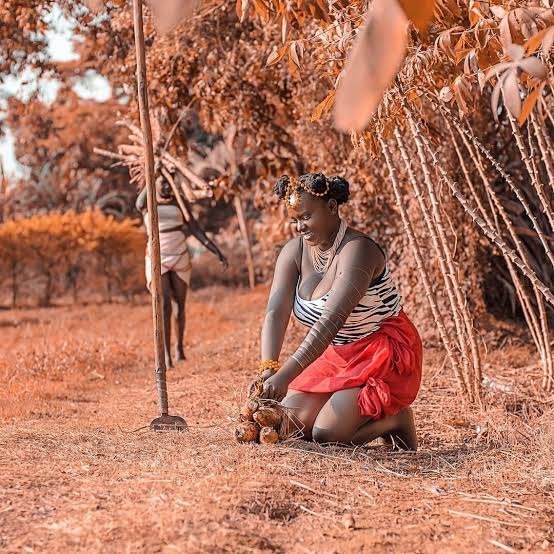
- The main occupations are hunting, farming and keeping livestock.
- Before colonial rule land was held in common: unused land belonged to the first family to till it, and passed to the eldest son. Traditional land tenure is still widely used in rural areas.
Dance
The Lango have many traditional dances. Okeme and Abuda are very popular and are performed at cultural functions, weddings and other ceremonies.
Warriors and chiefs
- The Lango army was united under one military leader chosen by agreement; his authority ended when the war was over. Famous leaders were Ongora Okubal, Opyen, Arim Oroba and Agoro Abwango.
- Rwot Icaya (Isaya) Ogwangguji, born in 1875, was county chief of Erute from 1918 to 1951 and was awarded the M.B.E. in 1956.
Read more
- Lango people, Wikipedia (the article this chapter is adapted from)
- Lango, Encyclopaedia Britannica
- Books the article cites: John Tosh, Clan Leaders and Colonial Chiefs in Lango: The Political History of an East African Stateless Society, 1800–1939 (1979); Richard T. Curley, Elders, Shades, and Women: Ceremonial Change in Lango, Uganda (1973); Angelo Tarantino, Lango i kare acon (Fountain Publishers, 2004)
Source and licence: this chapter is adapted from the Wikipedia article “Lango people” (its authors are listed in the article’s page history), available under the Creative Commons Attribution-ShareAlike 4.0 licence. We reworded and shortened the text and left out some parts. This chapter may be reused under the same licence.
Timeline
- 15th–17th c.
Oral tradition of migration
Oral tradition records that the ancestors of the Lango migrated from the Bahr el Ghazal region of present-day South Sudan between the 15th and 17th centuries and settled in northern Uganda as a society of clans.
- 19th c.
A society of clans and war leaders
Lango clans are small and localised. There are no permanent chiefs; war leaders such as Ongora Okubal, Opyen, Arim Oroba and Agoro Abwango are chosen by consensus and lose their authority when a war ends.
- c.1896
Resistance to Kakungulu
Oral accounts say Lango clans resisted a push into their country led by the Buganda general Semei Kakungulu.
- 1899
Kabalega captured
British forces capture Omukama Kabalega of Bunyoro on 9 April 1899. Lango warriors such as Owiny Akullu are remembered for having fought on his side.
- 1900s
British administration begins
A British district administration is set up in Lango and chiefs are appointed for the first time.
- 1919
Lira founded
Lira is founded as the administrative centre of the district.
- 1925
Birth of Milton Obote
Apollo Milton Obote is born on 28 December at Akokoro in Apac.
- 1951–1957
Rwot Icaya Ogwangguji
The long-serving county chief of Erute is promoted to Rwot Adwong in 1951, receives the MBE in 1956 and retires in 1957.
- 1962
Independence
Uganda becomes independent on 9 October. Obote has been Prime Minister since April, and Lira becomes a town council.
- 1966
Obote becomes President
After the constitutional crisis of 1966 Obote governs as executive President until 1971.
- 1971
Amin seizes power
In January, while Obote is abroad, Idi Amin takes power. Obote goes into exile in Tanzania.
- 1972
Akii-Bua wins Olympic gold
John Akii-Bua of Lira wins the 400 m hurdles at the Munich Olympics in a world-record 47.82 seconds, the first Olympic gold medal for Uganda.
- 1974
Lira and Apac districts created
The old Lango District is divided into Lira and Apac districts.
- 1979
Battle of Lira
On 15 May the last major battle of the Uganda–Tanzania War is fought at Lira, ending Amin's rule in the north.
- 1980
Second Obote government
Obote becomes President again on 17 December after the 1980 election.
- 1983
Death of Oyite-Ojok
Chief of Staff Maj. Gen. David Oyite-Ojok dies in a helicopter crash on 2 December.
- 1985
Obote overthrown
Army commanders overthrow Obote on 27 July.
- 2002–2004
Insurgency reaches Lango
LRA attacks displace families in Lira District, and in February 2004 the Barlonyo camp is attacked.
- 2006–2007
Return home
More than 310,000 of about 350,000 displaced people in Lira District return to their homes.
- 2005–2010
New districts
Dokolo, Amolatar, Oyam, Otuke, Alebtong and Kole are created from Lira and Apac.
- 2018
Kwania District
Kwania is created from Apac with effect from 1 July.
- 2020
Lira City
Lira becomes a city on 1 July 2020.
- 2024
Census
The 2024 national census counts 2,546,118 people in the Lango sub-region.
Lango words in this history
Words that come up again and again when Lango history is told, with their meanings from the dictionary.
Sources & further reading
- J. H. Driberg — The Lango: A Nilotic Tribe of Uganda (1923)The earliest detailed ethnography of the Lango, written by a colonial officer.
- Owiny — The Lango of Uganda: identity, origin, migration and settlementsA study of Lango origins and movements, published through Boston University.
- Ingham, K. — Writing on Lango District administrationOn the colonial chiefs and the Lango District council.
- Wikipedia — Articles on the Lango people, Lango sub-region, Lira, Milton Obote, David Oyite-Ojok and John Akii-BuaUsed for dates and for the outline of events; each fact should be checked against the books above.
- Daily Monitor — Features on Lango history and personalitiesUsed for Owiny Akullu and for stories of the district creations.
- Uganda Bureau of Statistics — National Population and Housing Census 2024The population figures quoted on the districts pages.
- Practical Lango Grammar — Worked examples and vocabularyThe source of the glossary spellings and of the dictionary and translator examples.
Do you hold a piece of Lango history?
An old photograph, a letter, a story told by your grandparents — add it to the archive so it is never lost.