
Apollo Milton Obote
Prime Minister and President of Uganda
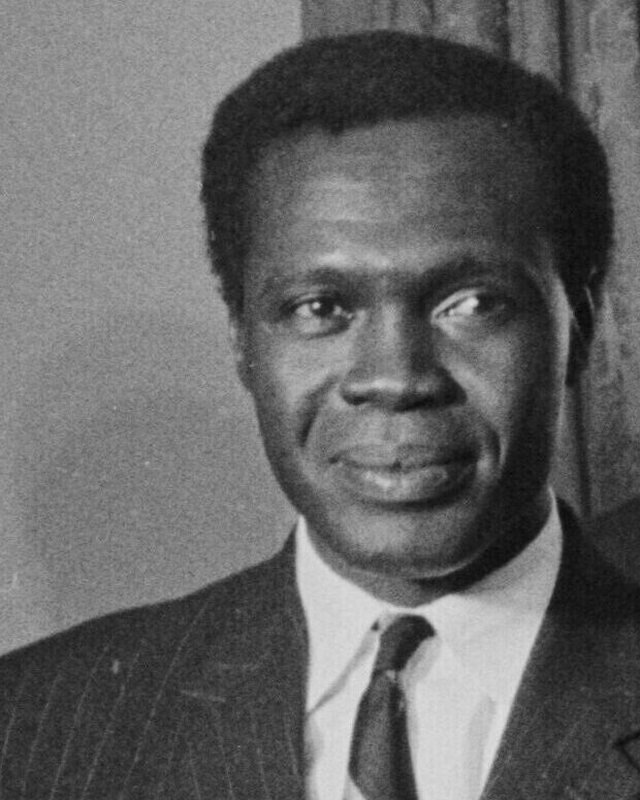
1925 – 2005
Led Uganda to independence in 1962 and served as its Prime Minister and, twice, its President. One of the most influential and debated figures in Ugandan history.
Photo: Warren K. Leffler, U.S. News & World Report, Library of Congress (cropped). Public domain. Photo page and licence
Apollo Milton Obote was born on 28 December 1925 at Akokoro village in Apac, the son of a Lango clan chief. He studied at a missionary school in Lira (from 1940), Gulu Junior Secondary School, Busoga College and Makerere University, which he left without completing a degree. He worked in Buganda and then in Kenya, where he became involved in the independence movement.
Road to independence
Returning to Uganda in 1956, Obote joined the Uganda National Congress and was elected to the colonial Legislative Council in 1957. In 1959 he led a faction that formed the Uganda People's Congress (UPC). He represented Uganda at the 1961 Lancaster House conference in London and then formed a coalition with the Buganda royalist party Kabaka Yekka. In April 1962 he became the country's first Prime Minister, and on 9 October 1962 Uganda became independent.
Presidency, exile and return
- 1966 – after a constitutional crisis he suspended the constitution and assumed the presidency; a new constitution in 1967 created an executive presidency.
- 1971 – while attending a Commonwealth conference in Singapore, he was overthrown by Idi Amin and went into exile, mainly in Tanzania.
- 1980–1985 – after Amin's fall he returned, led the UPC to victory in the 1980 election and served again as President from 17 December 1980 until 27 July 1985, when army commanders removed him from power.
Last years and legacy
Obote lived in exile in Kenya and Zambia and died in Johannesburg, South Africa, on 10 October 2005, aged 79. His ancestral home and monument in Apac are recognised as a national heritage site.
Obote is remembered as a founding figure of independent Uganda. His two periods in office were also marked by political repression and violent conflict, and historians and Ugandans continue to assess his legacy differently. His story is presented here as part of the history that young people should know and discuss.
Read and watch more
- Wikipedia Milton Obote · Wikipedia
- Article Former Ugandan leader Obote dies · BBC News
- Article Uganda: Obote’s legacy · DW
- Article Today in history: Obote becomes president · New Vision
These links open other websites, which are not ours. The story above is written in our own words from these sources; Wikipedia text is available under the Creative Commons Attribution-ShareAlike 4.0 licence.