
Traditional Attire
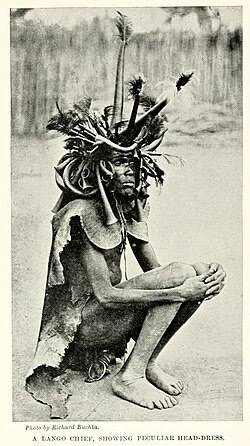
Head-dress and hairstyles: the tok and the kono
Beaded caps, feather crowns and named haircuts: how Lango men dressed their hair a century ago.
Read moreNecklaces, coils of wire, ear and lip ornaments, and the ivory bracelet that marked chiefly descent.
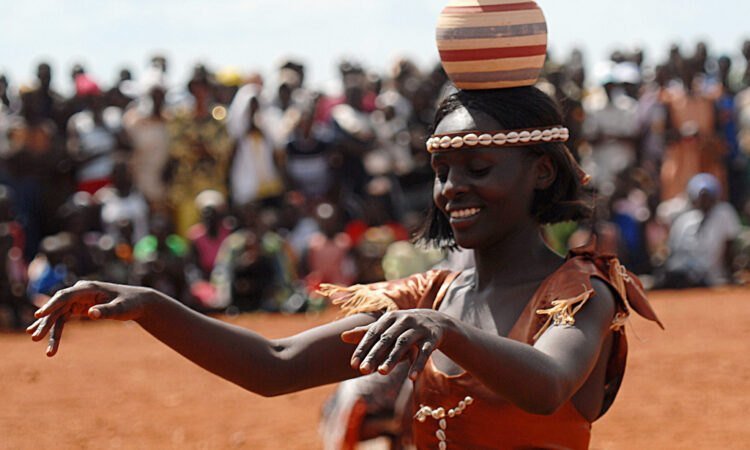
Driberg wrote that the Lango, men and women alike, were “inordinately fond of ornaments”. What a person wore depended mostly on what they could afford, and the two sides did not have to match: if there was only enough wire for one arm, it was worn on one arm.
The only mark of high rank was ivory: a bracelet on the left wrist, or an ivory ornament called ogwil hung on the chest, worn by chiefs and men descended from chiefs. Bodies were anointed with plant oils and, among women, curdled milk.
Source: J. H. Driberg, The Lango: A Nilotic Tribe of Uganda (London, 1923), pp. 61–65; public domain. It describes life about a hundred years ago as a colonial administrator saw it, so customs have changed and some may be told differently today. Elders and families are invited to correct it and add what they know.
Beaded caps, feather crowns and named haircuts: how Lango men dressed their hair a century ago.
Read moreLeather girdles, the ariko apron of metal chains and the skins used in Lango dress.
Read more